


La bibliothèque numérique des universités publiques du Sénégal

Auteur(s): Babcock, Joseph
Editeur: Packt Publishing
Année de Publication: 2021
pages: 489
ISBN: 978-1-80020-088-3
eISBN: 978-1-80020-850-6
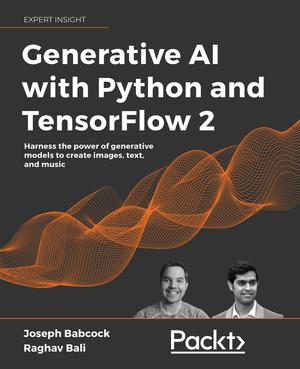
Understand the theory behind deep generative models and experiment with practical examples
Deep generative models are powerful tools that rival human creative capabilities. In this book, you'll discover how these models emerged, from restricted Boltzmann machines and deep belief networks to VAEs, GANs, and beyond. You'll develop a foundational understanding of generative AI and learn how to implement models yourself in TensorFlow, supported by references to seminal and current research.
After getting to grips with the fundamentals of deep neural networks, you'll set up a scalable code lab in the cloud and begin to explore the huge breadth of potential use cases for generative models. You'll look at Open AI's news generator, networks for style transfer and deepfakes, synergy with reinforcement learning, and more. As you progress, you'll recreate the code that makes these possible, piecing together TensorFlow layers, utility functions, and training loops to uncover links between the different modes of generation.
By the end of this book, you will have acquired the knowledge to create and implement your own generative AI models.
This book will appeal to Python programmers, seasoned modelers, and machine learning engineers who are keen to learn about the creation and implementation of generative models. To make the most out of this book, you should have a basic familiarity with probability theory, linear algebra, and deep learning.





